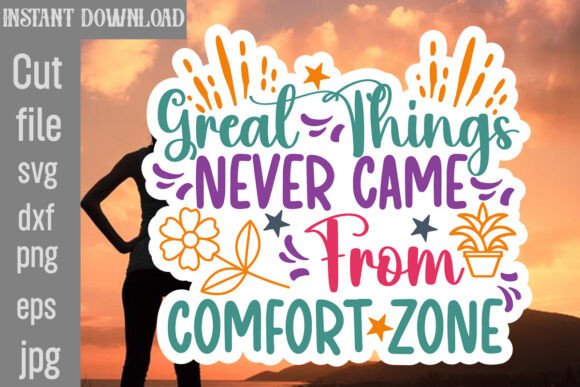
Reviewing Great Things Never Came from Comfort Zone
As a designer who has spent countless hours digitizing and stitching machine embroidery design files, I have learned that the gap between a digital preview and a finished product is where the real work happens. When I first pulled up Great Things Never Came from Comfort Zone, my initial reaction was one of cautious optimism. The phrase itself carries weight—it is motivational, slightly edgy, and deeply relevant to the modern creative spirit. But does it translate well into thread? Does it hold up under the needle? This review breaks down the practical realities of using this design in real-world embroidery project scenarios.
First Impressions: Mood and Visual Personality
The visual personality of Great Things Never Came from Comfort Zone leans heavily into the retro aesthetic that is currently dominating the Crafts and Graphics sectors. It feels nostalgic yet urgent. For an embroidery designer, this presents both an opportunity and a challenge. Retro styles often rely on bold, clean lines or specific texture effects that can be tricky to replicate with thread. The layout appears balanced, but the length of the phrase means we are dealing with significant horizontal spread. This is not a compact logo; it is a statement piece. The mood it creates is one of gentle encouragement mixed with a push for growth, making it ideal for items meant to inspire daily action.
Real-World Application: The Tote Bag Test
To truly evaluate this design, I imagined a specific client request: a custom canvas tote bag for a local co-working space. They wanted something that spoke to freelancers and entrepreneurs. Great Things Never Came from Comfort Zone fit the brief perfectly. However, placing this on a tote bag requires careful consideration of hoop size. Because the text is long, you cannot simply drop it into a standard 4x4 inch hoop without scaling it down to illegibility. You would likely need a 5x7 or even a 6x10 hoop to maintain the integrity of the lettering.
In this scenario, the design acts as the central focal point. If stitched correctly, it elevates a simple canvas bag into a high-value handmade product. The key here is readability. If the stitch density is too low, the fabric shows through, making the text look sparse and cheap. If it is too high, the fabric puckers, ruining the flat surface of the tote. My advice is to test this on scrap canvas first. Check how the fill stitch interacts with the weave of the material. A heavy stabilizer is non-negotiable here to prevent distortion during the stitching process.
Apparel and Custom Sweatshirts
Moving from accessories to apparel, let’s consider sweatshirt embroidery. This is perhaps the most natural home for this design. The thick, textured nature of fleece or French terry cloth provides a forgiving background for detailed text. When working on a custom apparel piece like a crewneck, the curvature of the chest area matters. You must ensure the design is centered and that the bottom line of text does not get lost in the ribbing or the pocket area if one exists.
For thread colors, contrast is king. Since the message is about stepping out of comfort zones, a bold color choice works well. Think mustard yellow on navy, or crisp white on heather gray. Avoid subtle tonal variations unless you are aiming for a very understated, luxury look. Remember, this is a motivational quote; it needs to be read quickly. If you are selling these as an Etsy seller or through a small shop product line, consistency in your color palette will help build brand recognition.
Navigating Technical Challenges
While the design is strong, it is not without its pitfalls. There are specific situations where you should use Great Things Never Came from Comfort Zone with extreme caution. First, avoid using it on thin, stretchy fabrics like lightweight jersey t-shirts unless you are an experienced digitizer who knows how to compensate for pull. The length of the text increases the risk of registration errors, where the letters shift out of alignment.
Second, be wary of caps and hats. Curved surfaces distort long horizontal lines. Unless the design has been specifically digitized for cap frames with appropriate pull compensation, the text may arch unnaturally or appear warped. Similarly, tiny details in the font—such as serifs or decorative swashes—can get lost if the design is scaled down for small items like baby clothes or patches. Always inspect the design at 100% zoom in your software before sending it to the machine. Look for potential thread breaks in tight corners.
Commercial Viability and Brand Trust
For those running a craft business, the professionalism of your finished product directly impacts customer trust. A poorly stitched version of this design can look messy and amateurish, while a clean, crisp execution signals quality. This affects your ability to charge premium prices. When creating printable mockup images for your online store, ensure the digital representation matches the physical reality. Misleading previews lead to returns and negative reviews.
This design also works well for holiday embroidery gifts, particularly for graduations or New Year’s resolutions. It serves as a personalized gift that feels thoughtful rather than generic. However, always confirm licensing terms. Just because you purchased the digital embroidery file does not automatically grant you the right to sell unlimited physical goods. Check whether the license allows for commercial use or if there are restrictions on batch sizes.
Practical Designer Notes for Success
Before you commit to a full production run, follow these practical steps:
- Test on Scrap Fabric: Always stitch a sample on the exact fabric type you plan to use. This reveals issues with tension and density.
- Check Stabilizer Choice: Use a cut-away stabilizer for stretchy knits and a tear-away for stable wovens. For hats, use a stiff backing.
- Review Stitch Types: Ensure that small elements use running stitch or simplified satin columns rather than complex fills that may bulk up.
- Contrast Check: View your design in black and white to ensure the shape is recognizable even without color differentiation.
- Verify File Formats: Ensure you have the correct embroidery file format for your machine (PES, DST, JEF, etc.). Conversion can sometimes alter stitch paths.
In conclusion, Great Things Never Came from Comfort Zone is a versatile and impactful design when handled with technical precision. It bridges the gap between motivational decor and wearable art. By respecting the limitations of your materials and machinery, you can turn this digital asset into a standout piece in your portfolio. Whether you are creating an embroidered patch for a jacket or a large-scale tote bag design, the key lies in the preparation. Take the time to refine your setup, and the results will speak for themselves.