Woodworking Dad: Cooler Design Review
As a designer who spends more time staring at stitch maps than actual wood grain, I approach new machine embroidery design files with a healthy dose of skepticism. We have all seen those "cool dad" graphics that look fantastic on a screen but turn into a tangled mess of thread breaks and puckering once they hit the hoop. Today, I am taking a close look at the Woodworking Dad Like a Regular Dad but C graphic to see if it holds up under the needle. This isn't just about whether it looks cute; it is about whether it can survive the rigors of a real-world embroidery project intended for sale or gifting.
First Impressions and Visual Personality
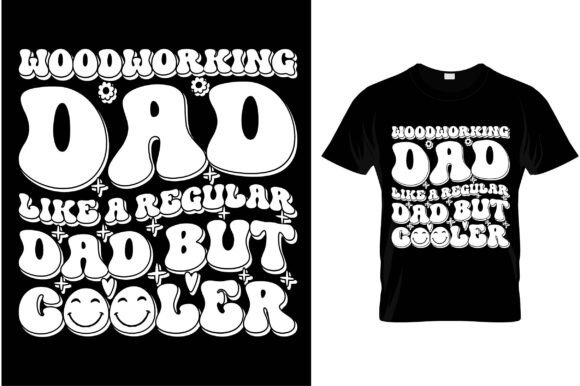
When I first pulled up the file for Woodworking Dad Like a Regular Dad but C, the immediate takeaway was its playful confidence. The phrase "Woodworking dad like a regular dad but cooler" strikes a specific chord—it is humorous without being overly cheesy, making it perfect for Father's Day, birthdays, or just everyday wear for the shop enthusiast. Visually, the layout suggests a strong typographic focus, likely accompanied by subtle woodworking icons like saws, hammers, or wood shavings. For an Etsy seller or craft business owner, this mood is gold. It appeals directly to a niche audience that takes pride in their hobby but doesn't take themselves too seriously.
The design feels versatile. While the product description highlights it as a T-Shirt Designs category item within the broader Graphics market, my eye immediately went to how this would translate to heavier fabrics. The boldness required to make the "cooler" statement pop suggests it needs space to breathe. It is not a delicate, whisper-quiet design; it is meant to be seen. This makes it an excellent candidate for sweatshirt embroidery or a sturdy tote bag design where the text can remain legible even from a distance.
Real-World Application: The Apron Test Case
To truly evaluate this digital embroidery file, I imagined a specific scenario: a custom order for a local boutique needing a batch of personalized aprons for a woodworking workshop. The client wanted something durable that could withstand sawdust and frequent washing. Here is where the rubber meets the road. If you are planning to use Woodworking Dad Like a Regular Dad but C on an apron, you are dealing with a thick, often textured fabric like canvas or denim.
In this context, the design's potential reliance on small details becomes critical. If the original graphic includes tiny lettering or intricate tool illustrations, these might get lost in the texture of the canvas or cause density issues. A successful finished product in this scenario depends on simplifying the stitch count. You might need to convert fine running stitch outlines into slightly bolder satin stitch borders to ensure durability. The humor of the quote shines when executed cleanly on a chest pocket or the bib of the apron, instantly branding the wearer as the "cool" expert in the room.
Beyond aprons, this design screams potential for custom apparel. Imagine it stitched onto the back of a denim jacket or the front of a heavy cotton tee. For small shop product lines, consistency is key. If you are selling these as personalized gift items, the visual appeal of the text arrangement determines the perceived value. A well-digitized version of this concept adds a layer of professionalism that generic heat transfers simply cannot match.
Navigating Technical Challenges
However, we must address the elephant in the room: the source material describes this as a "Printable Sublimation Design" with editable files and color changes. This is a crucial distinction for us as embroiderers. A sublimation graphic is raster or vector art intended for ink, not thread. Before you even think about hooping this up, you must understand that Woodworking Dad Like a Regular Dad but C in its raw form is likely not a ready-to-stitch embroidery file.
If you attempt to auto-digitize this directly from a printable graphic without manual intervention, you risk creating a monster of stitch density. Areas that look like solid blocks of color in a print file could become dense mats of thread that cause fabric distortion, especially on stretchy materials like jersey knits or thin baby clothes. For baby embroidery projects, where skin sensitivity and fabric drape are paramount, you would need to significantly reduce fill stitches and perhaps utilize an applique design approach instead. By cutting fabric shapes for the tools or letters and stitching them down, you maintain the visual impact while keeping the back of the garment soft and flat.
Furthermore, consider the hoop size. Slogans like this often require a larger-than-average hoop to maintain proper proportions. If you try to force it into a 4x4 hoop for a hat or a small patch, the text may become illegible. Curved surfaces like caps present another hurdle; the design needs to be arched correctly during digitizing to avoid looking warped once stitched. Always test the design on scrap fabric that matches your final material. Check the thread color contrast against dark fabrics, as white or light grey text on a black hoodie is a classic look, but it requires precise registration to avoid shadowing.
Maximizing Value and Professionalism
The true value of using a concept like Woodworking Dad Like a Regular Dad but C lies in its ability to foster customer trust. When a buyer sees a crisp, well-executed embroidery job, they associate that quality with your brand. Whether you are creating holiday embroidery gifts or stocking inventory for a craft fair, the clarity of the stitching reflects your attention to detail. A sloppy execution of a funny quote can ruin the joke; a sharp, clean execution makes it a keepsake.
For those looking to expand their design assets, remember that licensing is paramount. Since the source mentions "100 editable files" and "color changeable" features for sublimation, you must verify if the license extends to commercial embroidery sales. Many sublimation artists do not intend for their PNGs or SVGs to be converted into stitch files for resale. Always confirm the terms before listing commercial embroidery products derived from this graphic.
In conclusion, while Woodworking Dad Like a Regular Dad but C offers a fantastic thematic hook for the woodworking community, its success relies entirely on your preparation. Treat the graphic as a inspiration board rather than a final stitch map. Invest the time in proper digitizing, select the right stabilizer for your fabric choice, and respect the limitations of thread versus ink. Done right, this design transforms a simple piece of clothing into a statement piece that celebrates the cool, creative spirit of dads everywhere.