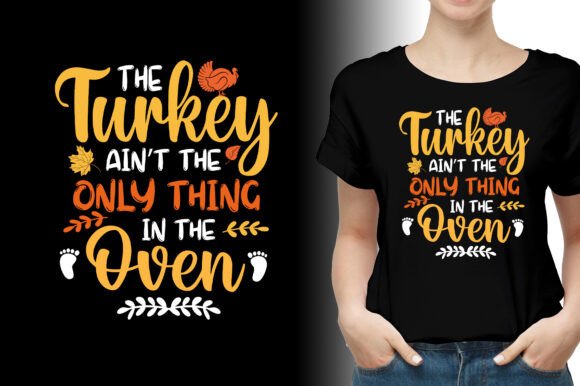
The Turkey Ain't the Only Thing: A Designer's Review
As we approach the peak of the holiday season, my design queue is overflowing with requests for Thanksgiving-themed custom apparel. Clients want everything from matching family sweatshirts to quirky kitchen towels that spark conversation at the dinner table. Recently, I took a close look at The Turkey Ain t the Only Thing graphic to evaluate its potential beyond the screen. While the product listing categorizes this under T-Shirt Designs and Graphics, providing high-resolution PNGs and an EPS vector file, my job is to determine if this visual asset can successfully translate into a tangible embroidery project or if it remains strictly a print-on-demand solution.
First Impressions and Visual Personality
When I first opened the files, the immediate takeaway was the bold, playful attitude of the phrase. The typography suggests a retro, slightly distressed vibe that fits perfectly with current trends in boutique home decor and casual holiday wear. The layout is horizontal and balanced, which is generally promising for embroidery, but the devil is always in the details. The provided assets include a 4500px by 5400px PNG at 300 DPI, which offers incredible clarity for scaling. However, as an embroiderer, I know that what looks crisp on a monitor can become a muddy mess of thread if the line weights are too thin or if the negative space is insufficient.
The mood here is lighthearted and cheeky. It's not a formal monogram; it's a statement piece. This tells me immediately that The Turkey Ain t the Only Thing belongs on products meant to be seen and smiled at, rather than hidden away. It has the kind of visual personality that works well for custom apparel intended for social gatherings, where humor and comfort take precedence over formal elegance.
Real-World Application Scenarios
To truly test the viability of this design, I imagined a specific client scenario: a local bakery owner who wants to create limited-edition aprons for her staff during November. She needs something durable, washable, and visually striking. Using the EPS vector file included in the package, I could trace the lettering to create a clean machine embroidery design. The thick strokes of the letters would hold up well to a satin stitch border with a tatami fill, ensuring the text remains legible even after multiple industrial washes.
Beyond aprons, this design shines on heavier fabrics. Imagine a cozy fleece sweatshirt embroidery project for a family reunion. The density of the fabric supports the weight of the thread, preventing puckering. For an Etsy seller looking to expand their craft business, this graphic could be adapted into a series of holiday embroidery items like tote bags or pillow covers. The "oven" reference naturally lends itself to kitchen textiles, making it a prime candidate for embroidered tea towels or pot holders, provided the stitch count is managed correctly to avoid stiffness.
For those selling digital embroidery files, the original vector source is a goldmine. It allows you to resize the artwork without losing quality, letting you create versions for different hoop sizes. Whether you are making a small patch for a jacket pocket or a large back-panel design for a varsity jacket, the scalability of the source file is a significant advantage.
Technical Considerations for Stitching
While the potential is high, there are technical hurdles to clear before stitching begins. The original product is a Graphics file, not a pre-digitized embroidery file. This means you cannot simply load the PNG into your machine. You must digitize it or hire a professional to do so. When converting The Turkey Ain t the Only Thing into stitches, pay close attention to the small gaps between letters. In a printed T-Shirt Design, these gaps are just white space. In embroidery, they require careful tie-offs and potentially a underlay stitch to prevent the background fabric from showing through awkwardly or causing thread nests.
Stitch density is another critical factor. If you are stitching this onto a thin cotton shirt, a dense fill might cause the fabric to pucker or tear. In such cases, consider using a lighter fill pattern or switching to a running stitch outline for a more vintage, hand-drawn aesthetic. Conversely, on a tote bag design made of heavy canvas, you can afford a higher density for a plush, premium feel.
Color selection also plays a massive role. The preview images show the design in black, white, and color. For a personalized gift, sticking to traditional autumn tones like burnt orange, deep brown, and cream works beautifully. However, don't be afraid to experiment. A neon thread on a dark hoodie could give this classic phrase a modern, streetwear edge. Just ensure your thread colors have enough contrast against the fabric texture so the message doesn't get lost.
Navigating Fabric and Hoop Challenges
Not every surface is suitable for this specific layout. Because the phrase is relatively long, it requires a wide hoop. If you are attempting to place this on a curved surface like a cap, you will need to check if your machine's cap frame can accommodate the width. Forcing a wide design into a small area often leads to distortion. Similarly, be cautious with stretchy fabrics like jersey knits unless you use a high-quality cut-away stabilizer. Without proper support, the movement of the fabric during wear can break the threads or warp the lettering.
Small details matter immensely in commercial projects. If a customer orders a batch of these for a small shop product line, consistency is key. Test the design on scrap fabric first. Check how the corners of the letters stitch out; sharp angles often need extra tie-offs to maintain their shape. Also, consider the end-user experience. If this is going on a baby item, ensure there are no loose threads on the back that could irritate sensitive skin, and verify that the finished product remains soft and flexible.
Maximizing Value and Professionalism
Ultimately, the success of The Turkey Ain t the Only Thing in your portfolio depends on execution. A well-stitched version of this design elevates the perceived value of the item. It transforms a simple piece of cloth into a handmade product with character. For apparel decorators, offering this as part of a seasonal collection can drive significant buyer engagement. It's relatable, timely, and versatile.
However, professionalism dictates that you respect the licensing terms. The product description mentions it is "POD Print-Ready," which usually implies specific usage rights for printing. Before selling finished embroidered goods or digital adaptations, you must confirm the license allows for commercial embroidery use. Some creators restrict the use of their vectors to print-only or require an extended license for physical goods. Ignoring this can lead to serious issues for your craft business.
In conclusion, while The Turkey Ain t the Only Thing starts as a digital graphic, its true potential lies in the hands of a skilled maker who understands how to bridge the gap between pixels and thread. With the right digitization, appropriate fabric choices, and attention to stitch quality, this design can become a standout star in your holiday lineup, delighting customers and adding a touch of humor to the festive season.