Reviewing "My Hair It’s All Messy" for Embroidery
As a designer who spends more time staring at stitch simulations than I care to admit, I have learned that not every cute graphic translates well to thread. We often see digital assets labeled as Crafts or Graphics that look pristine on a screen but turn into a tangled mess under the needle. Today, I am taking a close, practical look at The Kids My Hair It’s All Messy Life the design file. This is not just a theoretical review; I am evaluating this asset from the perspective of someone who needs to deliver a high-quality, durable finished product to a paying customer.
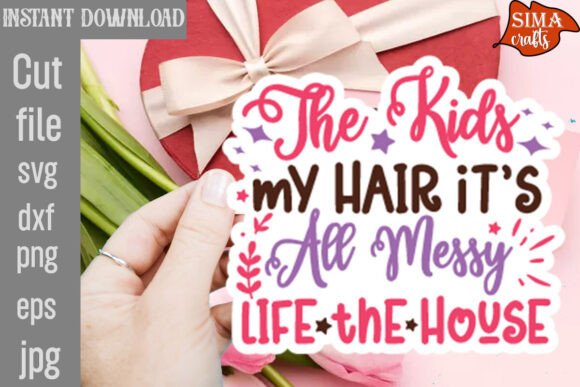
The first thing that strikes me about The Kids My Hair It’s All Messy Life the is its relatable, chaotic energy. It captures a specific mood—parental exhaustion mixed with humor—that resonates deeply with modern buyers. Visually, the layout suggests a playful typography-driven piece, likely accompanied by illustrative elements representing messy hair or a disheveled aesthetic. For an embroidery project, this theme is gold. It fits naturally into the niche of honest, humorous parenting apparel and home goods. However, the charm of the concept must be backed by technical execution. If the lines are too thin or the details too dense, the humor gets lost in the stitching.
Real-World Application: The Custom Tote Bag Test
To truly understand how this design performs, let us imagine a real-life scenario. A client approaches you for a custom gift for a new mother who is famously overwhelmed. You decide to use The Kids My Hair It’s All Messy Life the on a heavy canvas tote bag. This is a classic use case for this type of machine embroidery design. Canvas provides a stable base, which is crucial for maintaining the integrity of the text and any accompanying graphics.
When digitizing or preparing this file for the hoop, the primary concern is readability. The phrase is long, so scaling it down to fit a standard 5x7 hoop might compress the lettering. In my experience, compressed text leads to poor stitch definition. If you are using the included SVG or EPS files to create your own digitization, you must ensure that the font weight is substantial enough to support a satin stitch or a clean fill stitch. If the design relies on single-line running stitch outlines, it may look elegant but could get lost on textured fabrics. For a tote bag, I would recommend a bolder approach, ensuring the "messy" aspect of the hair illustration does not become actual visual noise due to excessive stitch density.
Versatility Across Products and Fabrics
Beyond tote bags, this design has significant potential in custom apparel. Imagine it embroidered on the back of a oversized sweatshirt. This is a trending style for Etsy sellers and boutique owners. The casual nature of the message pairs perfectly with the comfort of fleece or cotton blends. However, sweatshirt fabric is thick and plush. You must consider how the embroidery file interacts with the pile of the fabric. If the design includes fine details, they may sink into the fabric. Using a cutaway stabilizer is non-negotiable here to prevent puckering and ensure the design sits on top of the material rather than disappearing into it.
For baby embroidery projects, such as onesies or bibs, caution is required. While the message is parent-focused, the aesthetic might appeal to nurseries. However, baby skin is sensitive, and garments are washed frequently. You must check the back of the embroidery. If The Kids My Hair It’s All Messy Life the results in a dense cluster of stitches on the reverse side, it could irritate a child’s skin. In these cases, using a soft backing or opting for a simpler version of the design is wise. Additionally, for holiday embroidery gifts, this design works well as a humorous counterpoint to traditional, sentimental motifs. It adds personality to a personalized gift stack.
Technical Considerations for Digital Assets
It is important to note that this product is a DIGITAL DOWNLOAD ONLY. The package includes an SVG for Cricut, a DXF for Silhouette, an EPS vector, and a PNG with a transparent background. As an embroidery professional, I must point out a critical distinction: these are primarily cutting and print files, not native machine embroidery formats like PES or DST. This means you, the creator, are responsible for the digitization process if you intend to stitch it out.
This is actually a benefit for experienced designers. Having the EPS vector allows you to manipulate the shapes precisely before converting them into stitches. You can adjust curves, thicken thin lines, and optimize the layout for your specific hoop size. However, if you are not a digitizer, you will need to use auto-digitizing software or hire a professional. Auto-digitizing can be risky with complex typography. Always inspect the stitch path. Look for unnecessary jumps and ensure that the transition between colors in the thread colors palette is logical. A poorly digitized version of this design could result in thread breaks and frustration.
Navigating Fabric and Hoop Constraints
Where should you use this design carefully? Any curved surface, such as a cap or hat, presents challenges. The text length of The Kids My Hair It’s All Messy Life the may require arcing. If the arc is too steep, the letters will distort. On caps, space is limited. You might need to abbreviate or stack the text creatively. Furthermore, on stretchy fabrics like jersey knits, the stability of the design is paramount. Without proper hooping and stabilizing, the embroidery will pucker, ruining the handmade product aesthetic.
Dark fabrics also pose a challenge. If the design relies on light-colored threads for contrast, ensure your digitization accounts for visibility. A printable mockup can help visualize this, but nothing beats a physical test stitch. Always run a test on scrap fabric of the same type and weight as your final product. Check for registration issues, especially if the design involves multiple colors or layers. This step saves you from wasting expensive blanks and ensures your small shop product meets professional standards.
Enhancing Brand Value and Customer Trust
Ultimately, the quality of your embroidery reflects your brand. Using a well-executed version of The Kids My Hair It’s All Messy Life the can enhance customer trust. It shows that you understand current trends and have the technical skill to execute them. For commercial embroidery projects, consistency is key. If you sell this design on multiple items, ensure the stitch quality is uniform across all products. This builds recognition and professionalism.
When listing this item on your store, whether as a finished embroidered patch, a sweatshirt embroidery piece, or part of a larger collection, highlight the craftsmanship. Mention the care taken in digitizing and stitching. Buyers of design assets and finished goods alike appreciate transparency and quality. By treating this digital file as a starting point for creative excellence rather than a plug-and-play solution, you elevate the perceived value of your work.
In conclusion, The Kids My Hair It’s All Messy Life the is a versatile and engaging design concept for the modern maker. It bridges the gap between digital Graphics and tactile Crafts effectively, provided you respect the technical requirements of embroidery. Whether you are creating a funny tote bag design for a friend or a best-selling item for your online store, take the time to plan your stitches, choose your materials wisely, and test thoroughly. The result will be a durable, charming piece that customers love to wear and share.