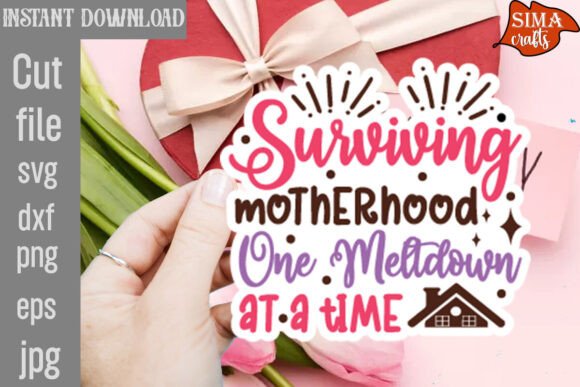
Review: Surviving Motherhood One Meltdown at a T
As an embroidery designer who has spent years digitizing and testing files for both personal joy and commercial profit, I approach every new machine embroidery design with a critical eye. It is not just about whether the artwork looks cute on a screen; it is about how those lines translate into thread, how the fabric reacts under the needle, and ultimately, whether the finished product holds up to the rigorous standards of a paying customer. Recently, I evaluated Surviving Motherhood One Meltdown at a T, a digital asset that promises to capture the chaotic humor of parenting. Here is my practical assessment of its viability for real-world embroidery projects.
First Impressions and Visual Personality
The immediate appeal of Surviving Motherhood One Meltdown at a T lies in its relatability. In the world of Crafts and handmade goods, humor sells, but only when it feels authentic rather than forced. This design strikes a balance between wit and wearability. Visually, the layout suggests a clean, modern aesthetic that avoids unnecessary clutter. For a designer, this is crucial. Overly complex designs often result in messy stitching, especially when scaled down for smaller items like baby clothes or pocket patches.
The theme resonates deeply with the target demographic: tired parents who appreciate a laugh. When I visualize this on a tote bag design or a casual sweatshirt, I see a product that sparks conversation. The visual personality is lighthearted yet polished, making it suitable for both a personalized gift for a friend and a staple item in an Etsy seller’s shop. However, the true test is not the concept, but the execution of the digital embroidery file itself.
Real-World Application and Fabric Performance
To truly understand the value of this graphics package, I mentally placed it into several common production scenarios. Consider a custom sweatshirt embroidery project. Sweatshirts are thick, textured, and prone to shifting. A design like Surviving Motherhood One Meltdown at a T needs sufficient stitch density to stand out against the fleece without becoming so dense that it creates a stiff, cardboard-like patch on the garment. If the digitizing relies heavily on fill stitch work, it must be balanced with proper underlay to prevent sinking.
Another ideal application is a canvas tote bag. Here, the stability of the fabric allows for crisp lines. Whether using a satin stitch for borders or text, the design must maintain clarity. I also considered its use in baby embroidery. Parents love humorous items for their little ones, but safety and comfort are paramount. If this design is scaled down for a onesie, the details must remain legible without creating scratchy edges that could irritate sensitive skin. This requires careful attention to thread colors and stitch types, ensuring that any running stitch elements are secure and neat.
For those running a craft business, versatility is key. This design could easily transition into an embroidered patch if applied to twill or felt before being attached to the final garment. Patches allow for higher density stitching since they are not constrained by the drape of a wearable garment, offering a premium look for boutique branding.
Technical Considerations for Digitizers and Makers
It is important to note that Surviving Motherhood One Meltdown at a T is sold as a DIGITAL DOWNLOAD ONLY. The package includes an SVG for Cricut, a DXF for Silhouette, an EPS vector, and a PNG with a transparent background at 300 DPI. This mix of formats indicates that the product is primarily geared toward cutting machines and print-on-demand services, rather than being a pre-digitized embroidery file (such as PES or DST). This distinction is vital for commercial embroidery professionals.
If you intend to embroider this design, you will likely need to digitize it yourself using the provided vector files (SVG/EPS) or convert the PNG for auto-digitizing software. This offers creative control but requires skill. You must determine the appropriate hoop size based on your manual digitization. A standard 5x7 inch hoop might be sufficient for a chest logo, while a larger 6x10 inch hoop could accommodate a full-front shirt design. Always check the aspect ratio of the provided design assets to ensure no distortion occurs during resizing.
When working with the vector files, pay close attention to node points. Clean vectors lead to cleaner stitch paths. If you are new to digitizing, start by testing the design on scrap fabric. Use a cut-away stabilizer for stretchy fabrics like t-shirts and a tear-away for stable woven cottons. This step is non-negotiable for maintaining professional quality.
Navigating Challenges in Production
While the design is charming, there are areas where caution is necessary. Tiny lettering, often found in humorous slogans, can become illegible if stitched too small or if the thread color does not contrast sufficiently with the fabric texture. Dark fabrics pose a particular challenge; if the design includes light-colored threads, you may need to adjust the stitch order or add a white underlay to prevent the fabric color from showing through.
Curved surfaces, such as caps or hats, require specialized digitizing techniques. A flat design like Surviving Motherhood One Meltdown at a T may distort if applied directly to a curved cap panel without proper compensation for pull and push factors. Similarly, avoid placing dense stitch areas near seams or zippers, as this can cause machine jams or uneven stitching.
For holiday embroidery or gift items that will be washed frequently, durability is a concern. Ensure that your stitch connections are tight and that you use high-quality polyester threads, which resist fading and breaking better than rayon. A printable mockup can help visualize the final look, but nothing replaces a physical test stitch-out.
Commercial Value and Brand Consistency
From a business perspective, Surviving Motherhood One Meltdown at a T has strong potential for small shop product lines. It appeals to a specific niche—mothers—who are often eager buyers of relatable content. Using this design in your Etsy listings or craft fair displays can enhance brand consistency if your shop focuses on humor, parenting, or lifestyle goods.
However, always confirm licensing terms before selling finished items. While the download provides versatile graphics, commercial rights for embroidery sales may vary. Assuming you have the right to use the design commercially, the key to success lies in presentation. High-quality photos of the embroidered item, showing the texture of the stitches and the drape of the fabric, will build customer trust. A well-executed custom apparel piece featuring this design can command a higher price point than a simple printed tee, thanks to the perceived value of handmade craftsmanship.
In conclusion, Surviving Motherhood One Meltdown at a T is a promising asset for designers and makers willing to put in the technical work. It offers a blend of humor and style that resonates with modern parents. By paying attention to digitizing best practices, selecting the right materials, and testing thoroughly, you can transform this digital file into a standout handmade product that delights customers and strengthens your brand.