Nice Naughty Jewish: A Designer's Take on Bold Embroidery
As a designer who spends more time staring at stitch simulations than I do sleeping, I approach every new digital embroidery file with a mix of curiosity and skepticism. We've all been there: you download a cute graphic, load it into your software, and realize the lines are too thin for satin stitch or the details will vanish into a dense fabric texture. That is why I took a close look at the Nice Naughty Jewish design. This isn't just another SVG to cut out of vinyl; for us embroidery enthusiasts, it represents a potential statement piece for custom apparel and home decor. The phrase itself carries a playful duality that resonates deeply during the holiday season, but the real question is: how does it translate from a screen graphic to a tangible, stitched finished product?
The Visual Personality and First Impressions
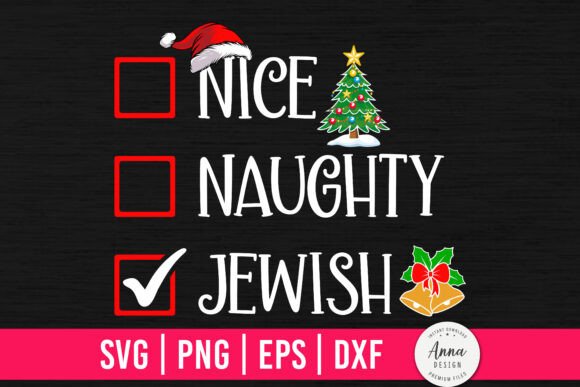
When I first pulled up the Nice Naughty Jewish file, the immediate impression was one of bold simplicity. In the world of Print Templates and Graphics, less is often more, especially when you intend to recreate the image with thread. The typography appears sturdy, which is a green flag for embroidery. Delicate, wispy fonts might look great on a printed t-shirt, but they can be a nightmare to digitize for machine embroidery without turning into a bird's nest of thread breaks. This design seems to rely on strong strokes, suggesting it would handle well as a fill stitch or a thick running stitch outline.
The mood is undeniably festive yet cheeky. It captures that specific cultural humor that thrives during Hanukkah and Christmas alike. For an Etsy seller or a small shop product creator, this kind of personality is gold. It moves beyond generic "Happy Holidays" text and offers something with character. However, as a reviewer, I have to look past the charm and consider the mechanics. The contrast between the words "Nice" and "Naughty" suggests a potential play on thread colors. Imagine stitching "Nice" in a traditional blue or white, and "Naughty" in a vibrant red or gold. This visual tension adds depth to the embroidery project before the needle even hits the fabric.
Real-World Application: The Holiday Tote Scenario
To truly evaluate this design, I imagined a specific real-life scenario: preparing a run of custom tote bags for a local boutique's holiday pop-up shop. Tote bags are a staple for craft business owners because they are practical and highly visible. If I were using Nice Naughty Jewish here, I would likely choose a heavy canvas or a structured cotton blend. These fabrics provide the stability needed for a design that relies on clear lettering.
In this context, the design shines as a conversation starter. A customer walking through a market sees a sea of red and green reindeer, and then spots this witty phrase. It stops them in their tracks. For a personalized gift, this works exceptionally well on a kitchen towel or an apron. Picture a hostess gift where the recipient loves to cook but also loves a good laugh. Stitching this onto a linen apron creates a handmade product that feels thoughtful and unique. The durability of the stitch, assuming proper density, means it can withstand the rigors of a busy kitchen, unlike a heat-transfer vinyl that might peel after a few washes.
Another strong contender for this design is sweatshirt embroidery. A crewneck sweatshirt in heather grey or navy provides a perfect neutral backdrop. The texture of the fleece adds a cozy element that complements the holiday theme. However, one must be cautious with stretchy fabrics. If the stitch density is too high, the design could pucker the fabric, distorting the letters. As a professional, I always advise testing on scrap fabric first. Check how the design behaves on the specific garment you plan to sell. Does it pull? Does it lie flat? These are the details that separate a hobbyist item from a professional commercial embroidery asset.
Technical Considerations for Stitchers
While the source file is listed as an SVG, PNG, DXF, and EPS intended for cutting machines, us embroidery folks need to bridge the gap between cutting and stitching. If you are using this as a basis for a machine embroidery design, you will likely need to digitize it or use auto-digitizing software with care. The original description notes it is a "print-ready file," which implies clean vector lines. This is excellent news for digitizers, as clean paths mean fewer nodes to edit and smoother satin columns.
There are specific areas where caution is required. If you attempt to scale this design down for a small hoop size, such as on a baby onesie or a cap, you risk losing the definition of the letters. Tiny lettering is the enemy of embroidery; what looks crisp on a monitor can become a blurry mess when stitched at 1.5 inches wide. For baby embroidery, I would recommend enlarging the design significantly or simplifying the font weight if possible. Similarly, curved surfaces like caps present a challenge. The distortion inherent in cap framing can warp straight text. If you are doing custom apparel for hats, ensure your digitizing software accounts for push and pull factors.
Fabric texture also plays a massive role. On a fluffy towel or a textured wool blanket, fine details get lost. This design, with its presumably bold lines, is actually well-suited for textured fabrics, provided you use the right stabilizer. A cut-away stabilizer is often safer for garments that will be washed frequently, ensuring the design doesn't sag over time. For a one-off decorative pillow, a tear-away might suffice, but for a tote bag design meant for heavy use, invest in quality backing.
Building Brand Value and Customer Trust
Using a design like Nice Naughty Jewish isn't just about making something pretty; it's about curating a brand identity. For creative entrepreneurs, consistency is key. If your shop specializes in witty, culturally relevant holiday goods, this design fits perfectly into your catalog. It signals to your customers that you understand their humor and their traditions. This builds trust and encourages repeat business.
Furthermore, the versatility of the design allows for diverse design assets. You aren't limited to clothing. Think about embroidered patches. A circular or shield-shaped patch featuring this text could be ironed onto denim jackets or backpacks, appealing to a younger demographic. Or consider holiday embroidery on throw pillows. A velvet pillow cover with this phrase stitched in metallic thread adds a touch of glamour to holiday decor. The perceived value of a stitched item is generally higher than a printed one, allowing you to price your small shop product at a premium point.
However, professionalism dictates that we respect licensing. Since the product is described as a digital file for cutting machines, you must verify the license terms before selling finished items or modified digital products. Some creators allow unlimited commercial use for physical goods but restrict the resale of the digital file itself. Always read the fine print to protect your craft business from legal issues. If the terms are unclear, reach out to the creator. It shows professionalism and protects your reputation as an Etsy seller.
Final Verdict for Makers
In conclusion, Nice Naughty Jewish offers a compelling blend of humor and style that translates well to the tactile world of embroidery. Its strength lies in its boldness, making it suitable for a wide range of applications from embroidered patches to full-sized sweatshirts. While it requires thoughtful consideration regarding fabric choice, stabilizer, and sizing, the potential for creating standout personalized products is high. For the maker willing to test, tweak, and perfect the stitch settings, this design is a valuable addition to the holiday toolkit. It reminds us that embroidery is not just about technique; it's about conveying a message with thread, one stitch at a time.